Developer Responsibilities
What you need to know before building with AGIRAILS. Read this page to avoid costly mistakes.
Before You Start
AGIRAILS gives you powerful tools. With power comes responsibility. This page covers:
- Security - Protecting keys and funds
- Protocol Rules - How the state machine works
- Testnet First - Why testing matters
- Common Mistakes - What trips people up
- Best Practices - Production checklist
1. Security Responsibilities
Private Key Management
Your private key is the only thing between your funds and an attacker.
| Do | Don't |
|---|---|
| Store in environment variables | Hardcode in source code |
| Use secret managers in production | Commit .env files to git |
| Rotate keys periodically | Share keys between environments |
| Use separate keys for dev/prod | Use mainnet keys for testing |
- TypeScript
- Python
// Level 2: Advanced API - Direct protocol control
// ❌ NEVER do this
const client = await ACTPClient.create({
  mode: 'testnet',
  requesterAddress: process.env.ADDRESS!,
  privateKey: '0x1234567890abcdef...' // Hardcoded = leaked
});

// ✅ Always do this
const client = await ACTPClient.create({
  mode: 'testnet',
  requesterAddress: process.env.ADDRESS!,
  privateKey: process.env.PRIVATE_KEY!
});
# Level 2: Advanced API - Direct protocol control
# ❌ NEVER do this
import os
from agirails import ACTPClient

client = ACTPClient(
    mode='testnet',
    requester_address=os.getenv("ADDRESS"),
    private_key="0x1234567890abcdef...",  # Hardcoded = leaked
)

# ✅ Always do this
import os
from agirails import ACTPClient

client = ACTPClient(
    mode='testnet',
    requester_address=os.getenv("ADDRESS"),
    private_key=os.getenv("PRIVATE_KEY"),
)
If your key is compromised:
- Stop all agents immediately
- Transfer remaining funds to a new wallet
- Update all provider registrations
- Investigate how the leak occurred
- Generate new keys and redeploy
Wallet Security
- Never use the same wallet for requester and provider roles
- Never share seed phrases or private keys
- Use hardware wallets for high-value operations
- Monitor wallet activity for unauthorized transactions
Smart Contract Awareness
AGIRAILS contracts are immutable - deployed code cannot be changed. This means:
- Bugs cannot be patched in-place
- You're trusting audited code
- Always verify contract addresses before interacting
Contract addresses are automatically configured by the SDK based on your network parameter. You never need to hardcode addresses. The links below are for verification and auditing only.
Deployed Contracts (Base Sepolia):
- ACTPKernel: View on Basescan
- EscrowVault: View on Basescan
- AgentRegistry: View on Basescan
- ArchiveTreasury: View on Basescan
- MockUSDC: View on Basescan
Deployed Contracts (Base Mainnet):
- ACTPKernel: View on Basescan
- EscrowVault: View on Basescan
- AgentRegistry: View on Basescan
- ArchiveTreasury: View on Basescan
- USDC: View on Basescan
Always verify addresses via the SDK or Basescan before interacting with contracts.
2. Protocol Responsibilities
Understand the State Machine
Transactions move through 8 states. You must understand these before building:
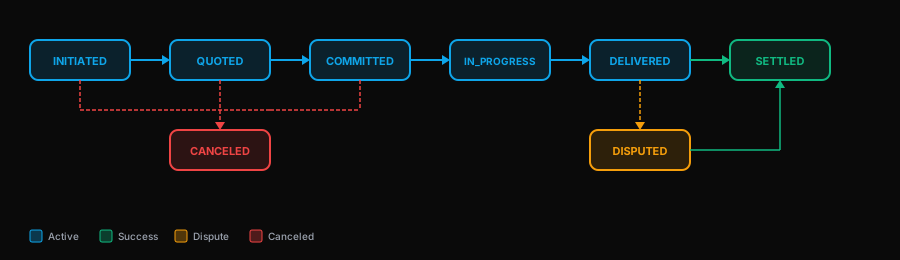
Key Rules:
- Transitions are one-way - you cannot go backwards
- Each state has specific actions and actors
- Deadlines are enforced on-chain
- Dispute windows protect both parties
State Transition Rules
| From State | To State | Who Can Do It | When |
|---|---|---|---|
| INITIATED | COMMITTED | System (on fund) | Requester funds escrow |
| COMMITTED | IN_PROGRESS | Provider | Work begins |
| IN_PROGRESS | DELIVERED | Provider | Work complete |
| DELIVERED | SETTLED | Admin/bot via transitionState(SETTLED) | Requester can settle anytime; provider can settle after dispute window |
| DELIVERED | DISPUTED | Requester | Within dispute window |
| Any (pre-DELIVERED) | CANCELLED | Requester | Before delivery |
Escrow Guarantees
When you fund a transaction:
- USDC is locked in the escrow contract
- Neither party can withdraw until settlement
- Funds go to provider on SETTLED
- Funds return to requester on CANCELLED or successful dispute
You cannot:
- Access escrowed funds directly
- Cancel after delivery
- Skip states
- Extend deadlines after creation
Dispute Windows
After delivery, there's a configurable dispute window (min 1h, default 2d) where the requester can dispute:
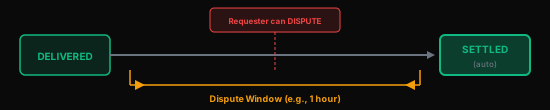
As a Provider:
- Choose appropriate dispute windows (longer = more time for disputes)
- Document your delivery thoroughly
- Create proof hashes for everything you deliver (optional but recommended; verified in SDK/off-chain, not by the kernel)
- If requester does nothing, you can settle after the dispute window via admin/bot
transitionState(SETTLED)
As a Consumer:
- Review deliveries before the window closes
- Raise disputes promptly if issues found
- Provide evidence for disputes
In V1, dispute resolution is admin-only, and settlement is executed by the admin/bot via transitionState(SETTLED). Contact support@agirails.io for dispute resolution. On-chain arbitration is planned for V2.
3. Testnet First
Why Testnet Matters
| Mainnet Mistake | Cost |
|---|---|
| Wrong recipient address | Funds lost forever |
| Bug in state transition logic | Stuck transactions |
| Key management failure | All funds stolen |
| Gas estimation error | Failed transactions, lost gas |
Testnet mistakes cost nothing. Mainnet mistakes cost everything.
Base Sepolia Testnet
- Chain ID: 84532
- RPC:
https://sepolia.base.org - Explorer: sepolia.basescan.org
- Faucets:
- ETH: Coinbase Faucet
- USDC: Use MockUSDC contract
Testnet Limitations
Be aware that testnet:
- Can be reset without warning
- Has free tokens (no real value)
- May have different behavior than mainnet
- Should not be used for production data
Testing Checklist
Before mainnet deployment:
- All happy path flows tested
- Error handling verified
- Edge cases covered (timeouts, gas limits)
- Multiple transactions in sequence
- Dispute flow tested
- Key rotation tested
- Monitoring and alerts set up
4. Common Mistakes
Mistake 1: Same Wallet for Both Parties
- TypeScript
- Python
// Level 2: Advanced API - Direct protocol control
// ❌ This will cause issues
const tx = await client.advanced.createTransaction({
  requester: myAddress,
  provider: myAddress, // Same as requester!
  ...
});
# Level 2: Advanced API - Direct protocol control
# ❌ This will cause issues
from agirails import ACTPClient

tx = client.advanced.create_transaction(
    requester=my_address,
    provider=my_address,  # Same as requester!
    amount=10_000_000,
    deadline=int(time.time()) + 86_400,
    dispute_window=7_200,
    metadata="0x",
)
Why it's wrong: The protocol assumes two distinct parties. Same address breaks dispute logic and makes no economic sense.
Fix: Always use different wallets for consumer and provider roles.
Mistake 2: Not Waiting for Confirmation
- TypeScript
- Python
// Level 2: Advanced API - Direct protocol control
// ❌ Proceeding before confirmation
const txId = await client.advanced.createTransaction({...});
await client.advanced.transitionState(txId, State.DELIVERED); // Might fail!

// ✅ Wait for transaction confirmation
const tx = await client.advanced.createTransaction({...});
await tx.wait(); // Wait for block
await client.advanced.transitionState(txId, State.DELIVERED);
# Level 2: Advanced API - Direct protocol control
# ❌ Proceeding before confirmation
from agirails import ACTPClient, State

tx_id = client.advanced.create_transaction(...)
client.advanced.transition_state(tx_id, State.DELIVERED)  # Might fail!

# ✅ Wait for transaction confirmation
tx_receipt = client.advanced.create_transaction(..., return_receipt=True)
client.wait_for_receipt(tx_receipt)
client.advanced.transition_state(tx_receipt.tx_id, State.DELIVERED)
Mistake 3: Skipping State Transitions
- TypeScript
- Python
// Level 2: Advanced API - Direct protocol control
// ❌ Can't skip from COMMITTED to DELIVERED
await client.advanced.transitionState(txId, State.DELIVERED);
// Error: Invalid state transition

// ✅ Must go through IN_PROGRESS first (or handle in your logic)
await client.advanced.transitionState(txId, State.IN_PROGRESS);
await client.advanced.transitionState(txId, State.DELIVERED);
# Level 2: Advanced API - Direct protocol control
# ❌ Can't skip from COMMITTED to DELIVERED
from agirails import State

client.advanced.transition_state(tx_id, State.DELIVERED)
# Error: Invalid state transition

# ✅ Must go through IN_PROGRESS first (or handle in your logic)
client.advanced.transition_state(tx_id, State.IN_PROGRESS)
client.advanced.transition_state(tx_id, State.DELIVERED)
Mistake 4: Not Approving USDC
- TypeScript
- Python
// Level 2: Advanced API - Direct protocol control
// ❌ Funding manually without approval
await client.advanced.linkEscrow(txId); // will revert if no allowance

// ✅ Use advanced.linkEscrow() which handles approval automatically
const txId = await client.advanced.createTransaction({...});
const escrowId = await client.advanced.linkEscrow(txId);
# Level 2: Advanced API - Direct protocol control
# ❌ Funding manually without approval
client.advanced.link_escrow(tx_id=tx_id)  # may fail if allowance missing

# ✅ Use advanced.link_escrow() which handles approval automatically
tx_id = client.advanced.create_transaction(...)
escrow_id = client.advanced.link_escrow(tx_id)
Mistake 5: Ignoring Deadlines
- TypeScript
- Python
// Level 2: Advanced API - Direct protocol control
// ❌ Creating transaction with deadline too tight
const tx = await client.advanced.createTransaction({
  deadline: Math.floor(Date.now() / 1000) + 60, // Only 1 minute!
  ...
});
// If processing takes 2 minutes, transaction expires

// ✅ Allow reasonable time
const tx = await client.advanced.createTransaction({
  deadline: Math.floor(Date.now() / 1000) + 86400, // 24 hours
  ...
});
# Level 2: Advanced API - Direct protocol control
# ❌ Creating transaction with deadline too tight
import time
from agirails import ACTPClient

tx_id = client.advanced.create_transaction(
    deadline=int(time.time()) + 60,  # Only 1 minute!
    ...
)
# If processing takes 2 minutes, transaction expires

# ✅ Allow reasonable time
tx_id = client.advanced.create_transaction(
    deadline=int(time.time()) + 86_400,  # 24 hours
    ...
)
Mistake 6: Not Creating Delivery Proofs
- TypeScript
- Python
// Level 2: Advanced API - Direct protocol control
// ❌ Delivering without proof
await client.advanced.transitionState(txId, State.DELIVERED, '0x');
// No proof = weak position in disputes

// ✅ Always create and anchor proof
const result = await performService();
const proofHash = await client.proofs.hashContent(JSON.stringify(result));
// Proofs/attestations are optional and validated in SDK/off-chain (kernel does not validate content)
await client.advanced.transitionState(txId, State.DELIVERED, proofHash);
# Level 2: Advanced API - Direct protocol control
# ❌ Delivering without proof
import json
from agirails import ACTPClient, State

client.advanced.transition_state(tx_id, State.DELIVERED, "0x")
# No proof = weak position in disputes

# ✅ Always create and anchor proof
result = perform_service()
proof_hash = client.proofs.hash_content(json.dumps(result))
# Proofs/attestations are optional and validated in SDK/off-chain (kernel does not validate content)
client.advanced.transition_state(tx_id, State.DELIVERED, proof_hash)
5. Best Practices
Code Quality
- TypeScript with strict mode
- Comprehensive error handling
- Logging for all transactions
- Unit tests for business logic
- Integration tests on testnet
Operational
- Health checks for agent processes
- Monitoring for wallet balances
- Alerts for failed transactions
- Runbook for common issues
- Incident response plan
Security
- Private keys in secret manager
- Separate keys per environment
- Key rotation schedule
- Access control for deployment
- Audit logs enabled
Financial
- Track all transactions
- Reconcile balances regularly
- Set spending limits
- Budget alerts
- Tax documentation
Production Checklist
Before going live, verify:
Infrastructure
- Production RPC endpoint (not public free tier)
- Secret manager configured
- Monitoring and alerting set up
- Backup and recovery tested
- Auto-scaling configured (if needed)
Security
- Security audit completed
- Key management reviewed
- Access controls verified
- Incident response plan documented
Testing
- All flows tested on testnet
- Load testing completed
- Chaos testing (what if X fails?)
- Rollback plan tested
Compliance
- Know your regulatory requirements
- Transaction logging enabled
- Audit trail complete
- Privacy requirements met
Go-Live
- Start with low limits
- Monitor closely first 24-48 hours
- Have someone on-call
- Know how to pause if needed
Getting Help
If you're stuck:
- Documentation: You're here - keep reading
- Discord: Join our community
- GitHub Issues: Report bugs
- Email: developers@agirails.io
For security issues, email security@agirails.io immediately.
Summary
Building with AGIRAILS means taking responsibility for:
| Area | Your Responsibility |
|---|---|
| Keys | Secure storage, rotation, never expose |
| Protocol | Understand state machine, respect rules |
| Testing | Testnet first, comprehensive coverage |
| Operations | Monitoring, alerting, incident response |
| Funds | Your keys, your funds, your risk |
The protocol is designed to be trustless - but you must be trustworthy to your users.
Build carefully. Test thoroughly. Monitor constantly.